

If you're locked inside a fixed term, the ordinary N9 isn't your only way out. Other routes can end it sooner.
On this page
What the N9 is, and who you hand it to
Most people come to this form after a rent increase lands, so it's worth knowing what your landlord can raise the rent to before you decide anything.
The N9 does one job. It's your written notice that you're leaving, and it goes to your landlord. You don't file it with the Landlord and Tenant Board, and the Board never sees it unless somebody starts a case.
Section 43(1) of the Residential Tenancies Act, 2006 sets the whole legal test, and it's three items long. The notice has to identify the rental unit, state the date the tenancy ends, and be signed by you or your agent. The form calls that the termination date, and it's the line that decides whether any of this works.
So a conversation isn't notice. Neither is a text to the superintendent, or a note left under the keys. Use the Board's current form, stamped v. 01/04/2022 at the foot of page one, and fill in every tenant's name.
Before the dates, one thing about signing. A landlord can't require this form at move-in, and the Board's own instructions list two exceptions. One is student housing. The other is a care home unit for rehabilitative or therapeutic services under a service manager agreement, with a stay of no more than four years and eviction tied to its care goals.
Red flag: If your landlord had you sign an N9 or an N11 when you first rented the place, it is void unless a narrow exception applies. The same is true of an agreement to end the tenancy made as a condition of getting the unit. Exceptions cover specified student housing and the care-home arrangement described above.
The date is where most notices go wrong
Sixty days sounds like a rule you can do in your head. It isn't, because the second test moves the answer: the date also has to land on the last day of a rental period, and your rental period is set by when your rent falls due, not by the calendar. If you're giving notice because you're closing on a house, line the two dates up early and ask a real estate lawyer which one is least likely to move.
If you pay rent by the month
Section 44(2) is the one most readers need. A monthly tenancy takes at least 60 days' notice, and the date "shall be on the last day of a rental period."
Work out your rental period first. Rent due on the first of the month means your period ends on the last day of a month, so the date you write is a 30th or a 31st. Rent due on the 15th means your period ends on the 14th, so you write the 14th of some later month. That one catches people out, because the calendar says one thing and the lease says another.
If you're still inside a fixed term
For a fixed term, the N9's date can't be before the term ends. If 60 days still reaches that date, section 44(4) lets you use it.
Miss the window and the term's expiry disappears. Say your term ends 31 December and you hand the form over on 10 November. That's 51 days, so 31 December is gone. The Board's current instructions say the date can't be earlier than the end of your term. If rent is due on the first, the next last day of a monthly rental period that clears 60 days is 31 January. Section 38(1) then turns the tenancy monthly automatically when the fixed term ends.
Nobody has to sign anything for that to happen.
If you pay by the week, or you live in a care home
Weekly and daily tenancies run on section 44(1): at least 28 days, again ending on the last day of a rental period. Pay each Monday and your period ends on a Sunday, so a Sunday is the date you write.
Care homes work differently on purpose. Section 145(1) gives you at least 30 days, and the date doesn't have to end a rental period, so pick whichever day suits the move. There's a second notice worth knowing about: under section 145(2) you can give 10 days' notice to stop the care services and meals, and after that you don't pay for them.
How the days get counted, and the February rule that bends sixty
The Board's own rules settle the arithmetic. Rule 1.12 says days mean calendar days, weekends and holidays included. Rule 1.13 says you count by "excluding the first day and including the last day," so the day you hand it over doesn't count and the termination date does.
Mailing it costs you five days before you start. Section 191(3) is blunt: "A notice or document given by mail shall be deemed to have been given on the fifth day after mailing." Post it on 2 October and the clock starts on 7 October.
Then there's the shortcut almost nobody knows. Section 44(5) treats a notice for the last day of February as 60 days' notice if it goes in by 1 January, and one for the last day of March if it goes in by 1 February.
The earliest date you can write on your N9
This works out the earliest date Ontario's rules let you write. It covers the ordinary notice a tenant gives. It doesn't cover an assignment your landlord refused, a missing standard lease, a notice about violence or abuse, or a mobile home site, because each of those has its own rule. The table further down has them.
The day before your next rent is due. Pay on the 1st and that's the last day of this month. Pay on the 15th and it's the 14th.
Use the first last day of a rent period that is not before your term ends. If the term ends on 31 December and rent is due on the 15th, enter 14 January.
Use the day you will hand it over, leave it in the mailbox, send the email, give it to the courier or put it in the mail.
Your date has to clear two tests at once: enough notice, and a day that ends a rental period.
- Month to month, or a fixed term that has endedAt least 60 days, and the date has to be the last day of a rent period.
- Still inside a fixed termThe end date on your lease, as long as you're at least 60 days ahead of it. Miss that and the tenancy carries on month to month. You're back to 60 days, ending on the last day of a rent period, which isn't always the day your term ends.
- Rent by the week or by the dayAt least 28 days, again on the last day of a rent period.
- A care home covered by the ActAt least 30 days, and the date doesn't have to end a rent period.
Mail it and the Act treats it as given on the fifth day after you post it, so post it five days earlier than you think. The last day of February and the last day of March have their own rule: get the notice in by 1 January, or by 1 February, and it counts as 60 days. Days run from the day after you hand it over, up to and including the date you wrote.
Email counts on the day you send it, but only if your landlord agreed in writing to take notices that way. A courier delivery counts the next day, or the next non-holiday if that day is a holiday. Sliding it under the door isn't a general way to serve a landlord.
The rules are Ontario's Residential Tenancies Act, 2006, sections 38, 44, 145 and 191, with the Landlord and Tenant Board's counting and delivery rules.
Ways out of a fixed term before it ends
Ask around and you'll be told a fixed term is a fixed term. That's not the whole story. Several routes don't need your landlord to agree.
Your landlord agrees, and what Form N11 really is
Section 37(3) is one sentence long: "A notice of termination need not be given if a landlord and a tenant have agreed to terminate a tenancy." No notice period, no minimum, no form required. The N11 is simply the Board's form for writing that agreement down, and writing it down is the point. Get a date on paper, signed by both of you.
There's a guard on it. Under section 37(5) an agreement to end the tenancy is void if it was made when you signed the lease or as a condition of getting the unit.
You ask to assign, and why a sublet is not the same thing
These two words get used as if they mean the same thing, but the legal difference matters.
An assignment hands the whole tenancy to somebody else and you walk away. A sublet doesn't. Section 97(4)(a) keeps you answerable to your landlord for every broken obligation right through the subtenancy. If your subtenant stops paying, that's your bill.
Now the lever, and it's the best one in the Act. Ask in writing to assign. If your landlord refuses, or says nothing for seven days, section 95(4) opens a door: you can give notice under section 96 within 30 days of the date you asked. Section 96(2) makes that notice the lesser of your usual period and 30 days, so a monthly tenant gives 30 and a weekly tenant gives 28. The date can be any day you like. It doesn't have to end a rental period, and it doesn't have to wait out your term.
Your landlord never gave you the standard lease
Since 30 April 2018 most Ontario landlords have had to use the government's standard form of lease, the one titled Residential Tenancy Agreement (Standard Form of Lease). Care homes, mobile home sites, land lease sites and most rent-geared-to-income units sit outside the rule.
If yours didn't use it, demand a signed copy in writing. That written demand starts two clocks. After 21 days with nothing delivered, section 12.1(6) lets you withhold up to one month's rent. Your landlord can demand it later only if the lease arrives within 30 days of your first withheld payment. And section 47.0.1 lets you end a fixed term early: 60 days' notice, ending on the last day of a rental period instead of the last day of the term.
The same route opens if your landlord does send the standard lease and you decide not to sign it. Move fast: that notice has to go in within 30 days of the day they handed it to you.
You or a child in your home is facing violence or abuse
Section 47.1 gives a tenant in this position a fast exit: at least 28 days' notice, any date, at any point in the tenancy. You use Form N15 rather than the N9, with either a court order issued in the last 90 days or a signed statement in the form the Act requires.
Two protections ride with it. Section 47.4 binds your landlord to keep the notice and everything attached to it confidential, including from the other people living in your unit, unless the Act allows or requires disclosure. And if you're a joint tenant, section 47.2 lets you end your own interest in the tenancy alone, without ending it for anybody else, and without needing their signature.
| Route | What has to be true first | The notice you give, and the date it can name | Rule |
|---|---|---|---|
| End of a fixed term | You are inside a fixed-term lease and want out on its last day | At least 60 days, ending on the last day of the term | s. 44(4) |
| Month to month | Your term has ended, or you never had one | At least 60 days, ending on the last day of a rental month | s. 44(2) |
| Week to week or day to day | You pay rent weekly or daily | At least 28 days, ending on the last day of a rental period | s. 44(1) |
| Care home | Your unit is in a care home covered by the Act | At least 30 days, ending on any date you pick | s. 145(1) |
| Your landlord agrees | You both agree on an end date. Form N11 or other writing gives you proof | No notice period at all. The agreed date is the date | s. 37(3) |
| Assignment refused or ignored | You asked to assign, and your landlord refused or said nothing for 7 days. Your notice goes in within 30 days of that request | At least 30 days, or 28 if you pay weekly or daily, ending on any date | ss. 95(4), 96(2) |
| No standard lease | Your agreement started on or after 30 April 2018, your landlord had to use the standard lease and did not, and 21 days have passed since your written demand | At least 60 days, ending on the last day of a rental period rather than the end of the term | s. 47.0.1 |
| Violence or abuse | You or a child living with you is covered, with a court order or a signed statement, and you use Form N15 | At least 28 days, ending on any date | ss. 47.1, 47.3 |
| Your landlord served an N12 or N13 | The date in your landlord's notice has not arrived yet | At least 10 days, ending on any date | ss. 48(4), 49(5), 50(5) |
All of these routes are Ontario law. The Act doesn't reach commercial tenancies at all, and mobile home sites, land lease sites and some subsidized units run on rules of their own.
If you just leave, here's what you actually owe
The fear is always the same: owing every month left in a fixed term. That can happen if the unit stays empty, but section 88 and your landlord's duty to limit the loss decide the real bill.
Section 88(1) sets the ceiling, and it sets it twice. If you moved out after giving a notice that was wrong, your arrears run only "for the period that ends on the earliest termination date that could have been specified in the notice" had you done it properly that day. If you gave no notice at all, the clock starts from the day your landlord knew or ought to have known you'd gone, and runs to the earliest date a proper notice given then could have named. That may be weeks for a monthly tenancy, but a fixed term can put every remaining month in play.
Then section 88(3) cuts it shorter still. Once a new tenant is entitled to move in, your liability stops there.
And section 88(4) puts your landlord's own conduct in the frame. In working out what you owe, "consideration shall be given to whether or not the landlord has taken reasonable steps to minimize losses," which is the duty section 16 places on anybody claiming money under a tenancy. A landlord who left the unit empty and didn't advertise has a problem, and it's their problem, not yours.
That part works in your favour. Your rent deposit, though, isn't a cushion for any of this. Section 106(10) makes your landlord apply it to the rent for the last rent period before the tenancy ends. Section 106(2) caps it at one rent period's rent or one month's rent, whichever is less, so it was always rent, never a damage deposit. Your landlord can still apply to the Board for what's genuinely owed. The Board can order money up to the greater of $10,000 and your province's small claims limit, and a claim above that goes to court instead.
After you hand it over
The notice is only as good as your ability to prove you gave it, and the day you gave it.
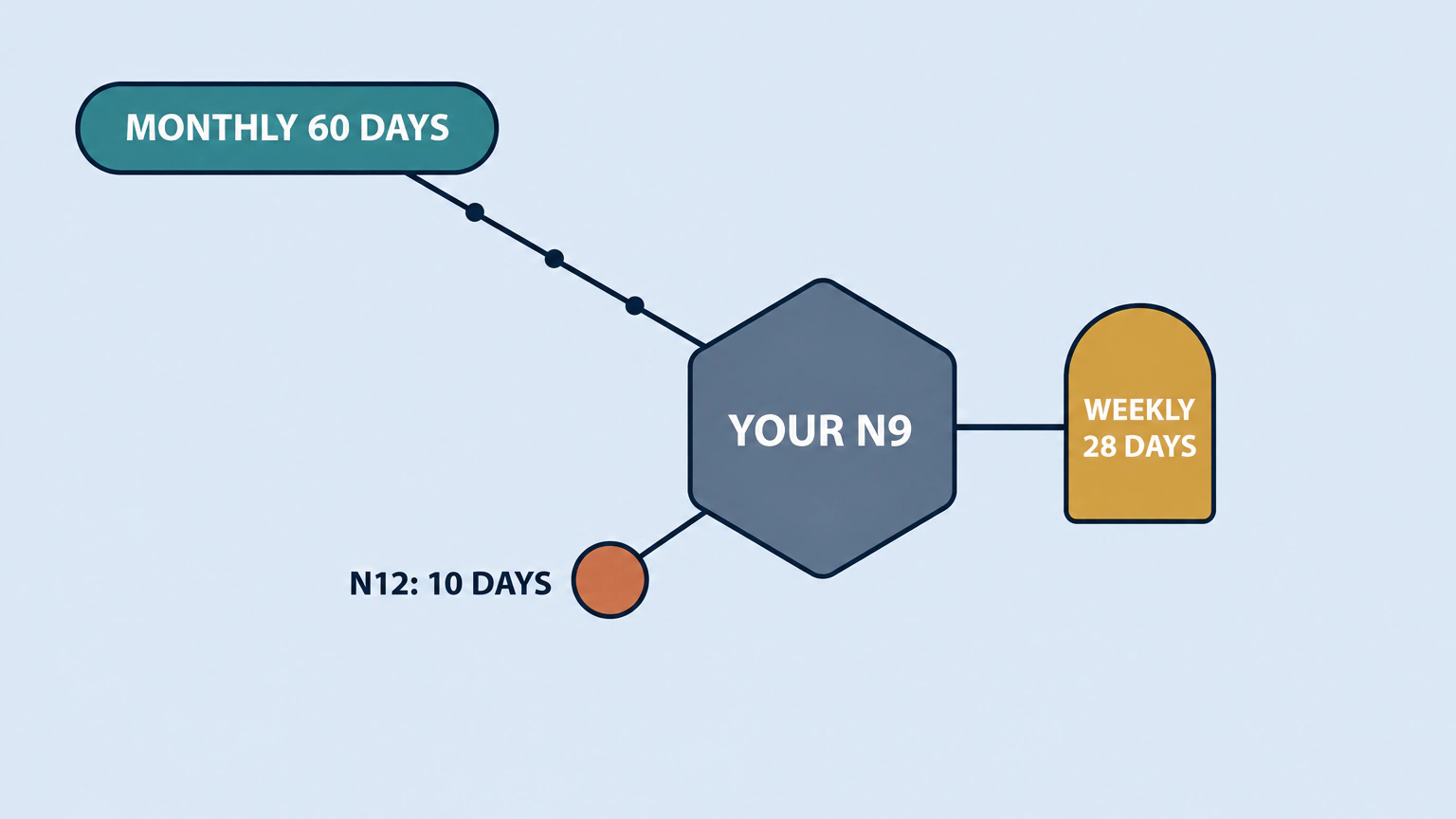
Proof that you delivered it
Section 191(1) lists the ways a notice counts as given. Hand it to your landlord. Hand it to an employee who exercises authority over the residential complex. Leave it in the mail box where their mail normally goes. Or mail it, and add the five deemed days.
Rule 3 adds courier, and email if your landlord has agreed to it in writing. Courier counts the next day, or, if that's a holiday, the next day that isn't. Email counts on the day you send it. Sliding it under the door isn't a general way to serve a landlord.
Photograph the signed form before it leaves your hands, and note the date, the time and the method.
- The rental unit's full address is on the form, written the way your landlord would recognize it.
- Every tenant named on the lease is named on the notice.
- The termination date is written the way the form asks, day then month then year.
- That date clears the minimum for your kind of tenancy.
- It lands on the last day of a rental period, unless you are on a route where it does not have to.
- You kept a photo of the signed form before it left your hands.
- You wrote down the date, the time and how you delivered it.
- If you mailed it, you counted five extra days.
The rules that changed on 21 September 2026 are your landlord's, not yours
A batch of amendments to the Act came into force that day, and the headlines were loud enough to worry tenants who were mid-move. They shouldn't have.
Here's what did move. A landlord giving an own-use notice on or after 21 September 2026 no longer owes the month's compensation if the date is at least 120 days away and ends a rental period or fixed term. What counts as persistently late rent is now set by regulation. The non-payment notice under section 59 can take effect as early as the seventh day. Section 77(8), the Board's power to set aside its own order, changed. So did section 82, on what a tenant may raise at a non-payment hearing, and section 83, on the Board's discretion to refuse or delay an eviction.
Every one of those is a landlord's notice or a Board procedure. Not one of them lands on section 43, 44, 47, 88, 95, 96, 97, 106 or 191. Nothing about your own notice, your own dates or what you owe after leaving has moved.
When a paralegal or a lawyer is worth the money
Three situations are worth paying for, and you'll know them when you're in one.
The first is a bill for the rest of a term after you've gone. Section 88 caps what you owe. But somebody has to put that cap in front of the Board, and a landlord who has invoiced you for eight months isn't going to drop it because you emailed a section number.
The second is a refused assignment you believe was unreasonable. Section 95(5) forbids an arbitrary or unreasonable refusal of a named assignee, and section 98 lets you take it to the Board. Arguing what counts as reasonable is the work.
The third is an N12 or N13 you think was served in bad faith so the unit could be re-rented for more.
Ontario licenses paralegals to represent tenants at the Board. Before a hearing, compare a lawyer's quote with a paralegal's. Start with a landlord and tenant lawyer or licensed paralegal. If the fight has left the Board and turned into a claim for money, that's work for civil litigation lawyers instead.
We're not your lawyer, and a fight over a whole term's rent is worth twenty minutes with someone who does this every day.
Questions tenants ask about the N9
Does my landlord have to accept my N9?
There's nothing to accept. A notice that meets section 43(1) ends the tenancy on the date it names, whether your landlord likes that date or not. Section 37(2) puts it plainly: give the notice properly, move out in line with it, and the tenancy ends on the date the notice sets. Your landlord can't refuse it, stretch it or charge for it.
Can I cancel an N9 after I have given it?
Not on your own, and there's real risk in assuming otherwise. Your landlord can apply to the Board as soon as they have it, and an order can follow without a hearing. If you stay past your termination date and they haven't applied within 30 days of it, section 46(1) makes the notice void. Ask in writing, and don't rely on a friendly reply.
I have a roommate on the lease. Do we both have to sign?
Put every tenant's name on the form, because the N9 tells you to include them. Section 47.2 creates a special route for a tenant facing violence or abuse to end only their own interest. The Act does not spell out the effect of an ordinary N9 signed by only one joint tenant. If your roommate won't join in, get advice before serving it.
Do I have to give a reason for moving out?
No. Section 43(1) asks for the unit, the date and your signature, and stops there. Reasons are a duty the Act puts on your landlord's notices instead: section 43(2) makes a landlord set out the grounds and the details and tell you what happens next. You can add a line about a new job if you want to. It changes nothing about whether the notice works.
Do I still pay rent for my last month if I paid a deposit?
Usually not for the period the deposit covers, because that money was never a damage deposit. Section 106(10) applies it to your last rent period. If the deposit doesn't cover all the rent due for that final period, you still owe the difference.
What happens if I give less than 60 days notice?
You may owe rent to the earliest date a proper notice given that day could have named. If you're still inside a fixed term, that date may be its expiry. Section 88(3) stops the arrears sooner if a new tenant is entitled to move in, and section 88(4) weighs whether your landlord took reasonable steps to cut the loss.